
As the sizzling sound of a hot skillet fills my kitchen, I can almost hear the cheerful chatter of diners at my favorite Japanese steakhouse. These Hibachi Steak Bowls are my answer to those bustling nights when a restaurant meal just won’t do. With juicy sirloin steak, colorful sautéed vegetables, and fluffy fried rice, this recipe is a delightful way to enjoy Japanese-inspired flavors right at home. Not only is it quick and perfect for a busy weeknight, but it also lends itself beautifully to meal prep—making delicious lunches a breeze! Are you ready to transform your dinner routine with a dish that feels like a culinary adventure? Let’s dive into the magic of hibachi cooking!
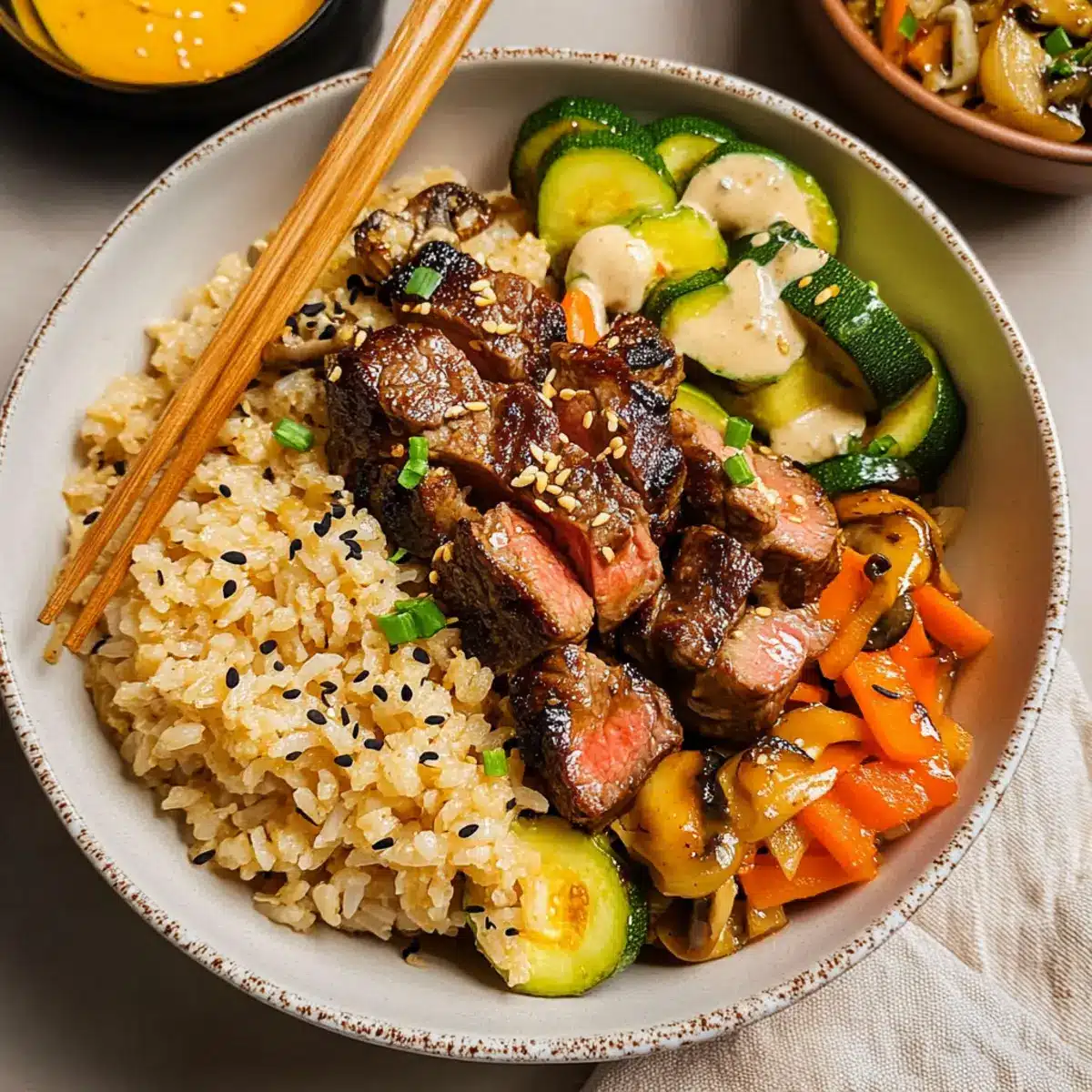
Why Love These Hibachi Steak Bowls?
Quick and Easy: You’ll appreciate how fast this recipe comes together, making it ideal for busy weeknights without sacrificing flavor.
Flavor Explosion: Each bite offers a delightful combination of savory steak, fresh vegetables, and aromatic spices that will transport you straight to a lively Japanese grill.
Meal Prep Friendly: Perfect for leftovers, these bowls can be made in advance and stored, ensuring you have a delicious meal ready to go all week.
Versatile Options: Feel free to swap sirloin with your meat of choice, or tailor the veggies to your liking—try adding crisp bell peppers or vibrant broccoli for extra nutrition.
Impressive Presentation: These bowls not only taste fantastic but also look beautiful, making them a hit for family dinners and gatherings alike. Enjoy them alongside Spicy Garlic Steak for a culinary showstopper!
Hibachi Steak Bowls Ingredients
For the Steak Marinade
- Sirloin Steak – The star ingredient providing protein and flavor; opt for top sirloin for optimal tenderness.
- Mirin – Adds sweetness and depth to the marinade; substitute with a mix of rice vinegar and sugar if needed.
- Garlic – Offers aromatic flavor; fresh is preferred, but garlic powder can be used as a substitute.
- Ginger – Enhances freshness and spice; ground ginger or ginger paste can be alternative options.
- Sesame Oil – Provides a rich, nutty flavor; can be replaced with vegetable oil for a lighter dish.
For the Vegetables
- Carrots – Adds crunch and sweetness to the dish; other veggies like bell peppers or green beans can also be used.
- Zucchini – Increases freshness; substitute with yellow squash or snap peas if desired.
- Mushrooms – Contributes umami flavor and texture; substitute with eggplant or omit if not preferred.
For the Base
- Fried Rice – Serves as the base for the bowls; leftover rice is best, or use instant rice for convenience.
Step‑by‑Step Instructions for Hibachi Steak Bowls
Step 1: Marinate the Steak
Begin by combining the sirloin steak with mirin, minced garlic, freshly grated ginger, and sesame oil in a bowl. Make sure the steak is well coated and let it marinate at room temperature for 30 minutes to 1 hour. This infuses the meat with flavor, enhancing the final taste of your Hibachi Steak Bowls.
Step 2: Prepare the Vegetables
While the steak is marinating, wash and slice the carrots, zucchini, and mushrooms into bite-sized pieces. Aim for uniformity to ensure even cooking. This not only adds vibrant colors but also creates a visual appeal in your Hibachi Steak Bowls. Set the prepared vegetables aside as you ready your skillet.
Step 3: Sauté the Vegetables
Heat a large skillet or wok over medium-high heat and add a drizzle of vegetable oil. Once hot, add the sliced vegetables and sauté for about 5-7 minutes, stirring frequently. You want them to become tender yet retain a bit of crispness. The colorful veggies will brighten up your Hibachi Steak Bowls and bring a satisfying crunch.
Step 4: Cook the Steak
Remove the cooked vegetables from the skillet and increase the heat to high. Add a touch more oil if necessary, then place the marinated sirloin steak in the hot skillet. Sear the steak for approximately 5-8 minutes, turning it halfway through, until it reaches your desired doneness. A nice browning on the outside will add to the delicious flavors of the Hibachi Steak Bowls.
Step 5: Assemble the Bowls
Once the steak is cooked, let it rest for a couple of minutes before slicing it against the grain. In serving bowls, layer a generous scoop of fried rice as the base, then top it with the sliced steak and sautéed vegetables. For an added touch, drizzle with soy sauce or sesame seeds, crafting a beautiful presentation for your Hibachi Steak Bowls.
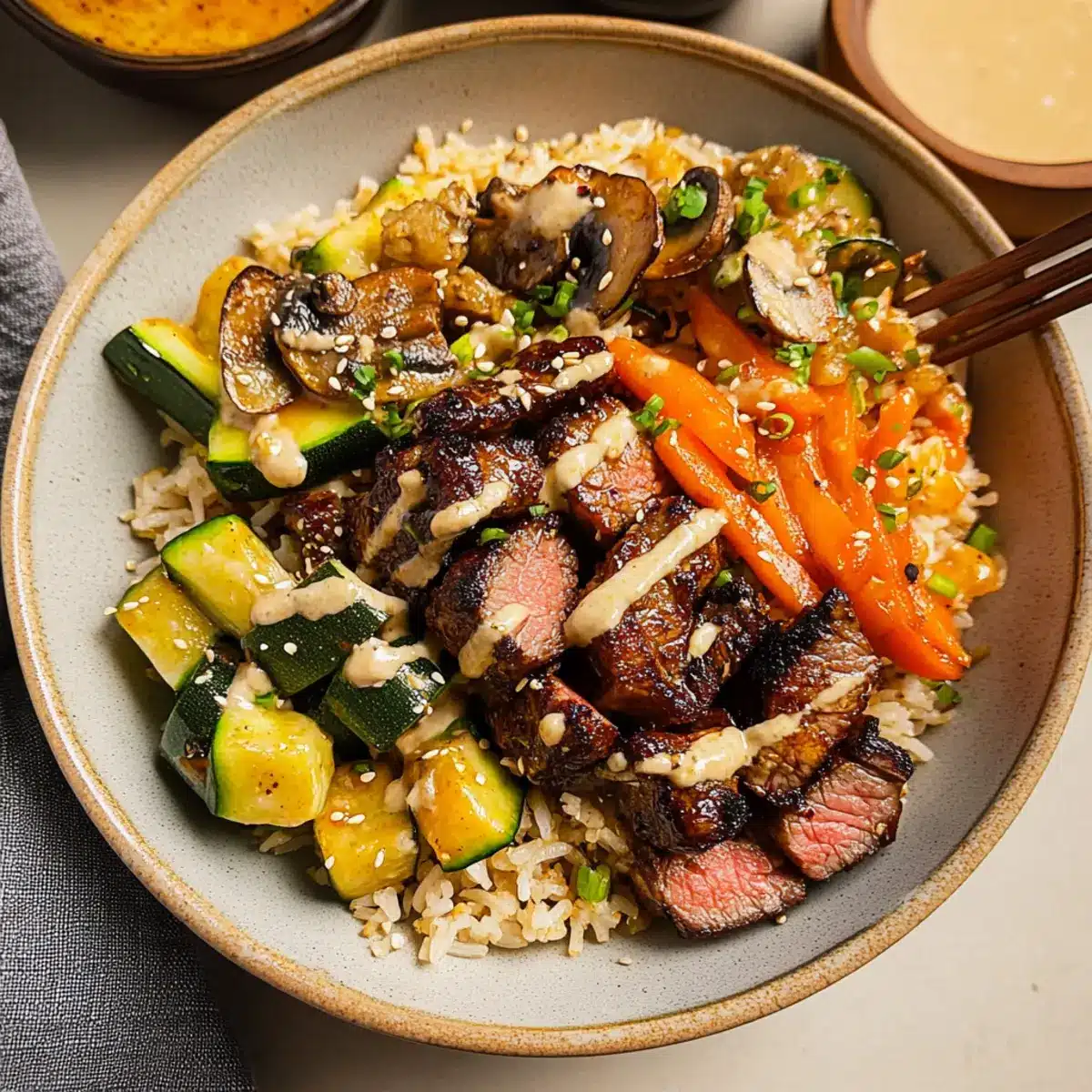
Make Ahead Options
These Hibachi Steak Bowls are perfect for meal prep, allowing you to enjoy delicious home-cooked meals on busy weeknights! You can marinate the sirloin steak up to 24 hours in advance, which enhances the flavor and ensures a tender bite. Additionally, you can slice and refrigerate the vegetables (carrots, zucchini, and mushrooms) up to 3 days before cooking, so they’re ready when you are. To maintain the freshness and quality, keep the marinated steak and vegetables in separate airtight containers. When it’s time to serve, simply sauté the veggies and cook the marinated steak as per the recipe; you’ll have restaurant-quality Hibachi Steak Bowls ready in no time!
Expert Tips for Hibachi Steak Bowls
-
Marination Matters: Allow the steak to marinate for at least 30 minutes; longer marination enhances the flavors, making each bite more delicious.
-
High Heat Cooking: Always use high heat when searing the steak to achieve that mouthwatering crust. This forms a great texture that’s central to the hibachi experience.
-
Veggie Variety: Don’t hesitate to mix up the vegetables! Adding seasonal options not only boosts nutrition but also keeps the dish exciting and fresh.
-
Rice Choice: Leftover rice works best for these Hibachi Steak Bowls. If using fresh rice, let it cool to prevent clumping and ensure fluffiness.
-
Slicing Techniques: Slice the steak against the grain for maximum tenderness. This small tip can make a huge difference in the overall enjoyment of your meal.
Variations & Substitutions for Hibachi Steak Bowls
Feel free to unleash your culinary creativity and personalize these Hibachi Steak Bowls to tantalize your taste buds!
-
Chicken Swap: Replace sirloin with chicken breast for a lighter, protein-packed option. Just marinate it the same way and cook until juicy.
-
Shrimp Delight: Use shrimp instead of beef for a seafood twist. You’ll achieve a quicker cook time and a delightful change in flavor.
-
Veggie Boost: Add extra vegetables like bell peppers or snap peas for color and crunch, enhancing the dish’s nutrition.
-
Rice Alternative: Turn this into a cauliflower rice bowl instead of traditional fried rice for a low-carb alternative that’s still satisfying.
-
Sauce Enhancer: Drizzle with additional sauces like teriyaki or sriracha for extra flavor depth. A splash of yum yum sauce brings sweet creaminess to every bite.
-
Heat It Up: For those who enjoy a kick, add chili flakes or fresh sliced jalapeños to the sautéed vegetables, bringing an exciting, spicy twist.
-
Umami Upgrade: Incorporate shiitake mushrooms or oyster mushrooms for an umami-packed punch that harmonizes beautifully with the steak.
-
Texture Contrast: Top the bowls with crunchy sesame seeds or sliced green onions for an added layer of texture and fresh flavor.
Embrace the spirit of hibachi cooking and explore these variations. You can pair it with my delicious Honey Salmon Bowls for a themed dinner night or shake things up with vibrant Rice Kimchi Bowls!
How to Store and Freeze Hibachi Steak Bowls
Fridge: Store leftover hibachi steak bowls in an airtight container for up to 3 days to preserve freshness. Make sure to cool them down before sealing to prevent condensation.
Freezer: For longer storage, freeze the components separately—steak, vegetables, and fried rice—in airtight bags for up to 2 months. Thaw in the fridge overnight before reheating.
Reheating: To regain the original flavors and textures, reheat the steak and vegetables on the stovetop over medium heat. Add a splash of water or broth to the rice before microwaving for moisture.
Meal Prep Tip: These hibachi steak bowls are perfect for meal prep! Prepare all ingredients in advance and store them separately; just combine before serving for fresh, quick meals throughout the week.
What to Serve with Hibachi Steak Bowls?
Savoring a homemade Hibachi Steak Bowl is just the beginning of an exciting culinary journey; pair it with these delightful accompaniments for a complete meal experience.
- Creamy Miso Soup: A warm and comforting soup that adds a lovely umami flavor, perfectly complementing the savory steak.
- Garlic Fried Rice: Elevate the rice base by sautéing it with garlic and a hint of soy sauce for an even richer flavor.
- Steamed Edamame: Lightly salted and served hot, these protein-packed pods offer a delightful crunchy contrast to crispy vegetables.
- Tangy Cucumber Salad: The refreshing crunch of pickled cucumbers balances the richness of the steak, cleansing your palate beautifully.
Enjoying these dishes alongside your Hibachi Steak Bowls makes for a memorable dining experience. Pair them with a chilled glass of sparkling water or a fruity iced tea for a refreshing finish!
- Dessert option: Try serving a light green tea ice cream as a sweet, creamy ending that ties the meal together with traditional Asian flavors.
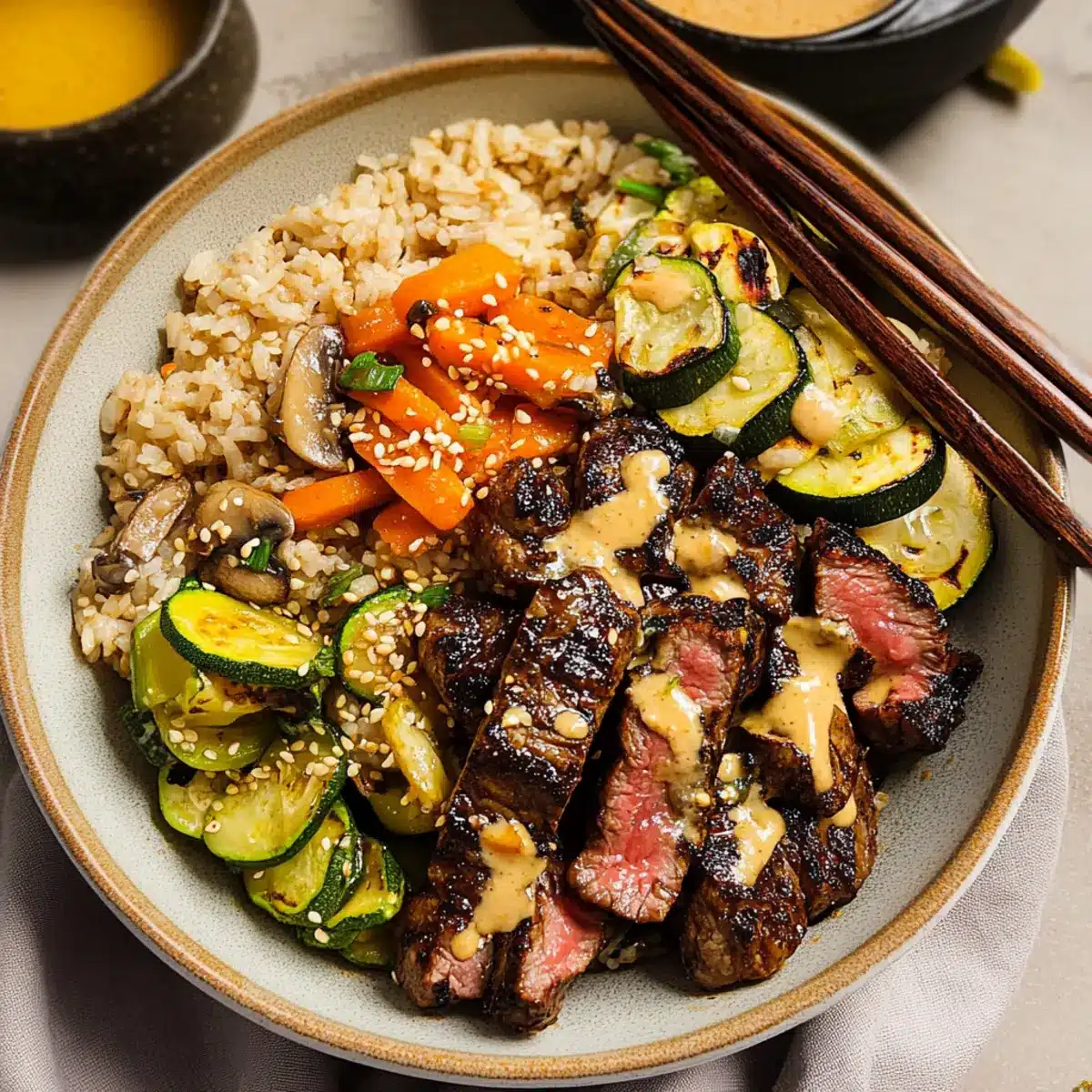
Hibachi Steak Bowls Recipe FAQs
What type of sirloin steak should I use for Hibachi Steak Bowls?
For Hibachi Steak Bowls, I recommend using top sirloin steak, as it’s known for its tenderness and rich flavor. Look for cuts that have a nice marbling of fat to ensure juiciness and flavor. Avoid steaks with a lot of connective tissue, as they can be tough.
How should I store leftovers from my Hibachi Steak Bowls?
To keep your Hibachi Steak Bowls fresh, store any leftovers in an airtight container in the refrigerator for up to 3 days. It’s a great idea to let them cool to room temperature before sealing to avoid condensation inside the container, which can make the rice soggy.
Can I freeze Hibachi Steak Bowls?
Absolutely! For freezing Hibachi Steak Bowls, I recommend separating the components—steak, vegetables, and fried rice—into airtight bags. The components can be stored in the freezer for up to 2 months. When ready to enjoy, simply thaw the ingredients in the fridge overnight before reheating.
What should I do if my steak is tough after cooking?
If your steak turns out tough, it may be due to not slicing against the grain. To fix this, take the cooked steak, and slice it thinly against the grain—which means cutting across the fibers—before serving. This technique makes the meat more tender and enjoyable.
Are there any dietary considerations for Hibachi Steak Bowls?
Definitely! If you’re cooking for someone with allergies, ensure that they’re not sensitive to soy sauce, garlic, or sesame oil, as these are common allergens in Hibachi cooking. For a gluten-free version, opt for gluten-free soy sauce or tamari, and check vegetable choices for cross-contamination.
How can I ensure my vegetables come out perfectly when sautéing?
To achieve perfectly sautéed vegetables for your Hibachi Steak Bowls, remember to keep the heat at medium-high. Cook the veggies for about 5-7 minutes, stirring frequently. They should be vibrant and still slightly crisp when done. If you see them wilting or turning too soft, you’ve overcooked them, so keep an eye on the texture!
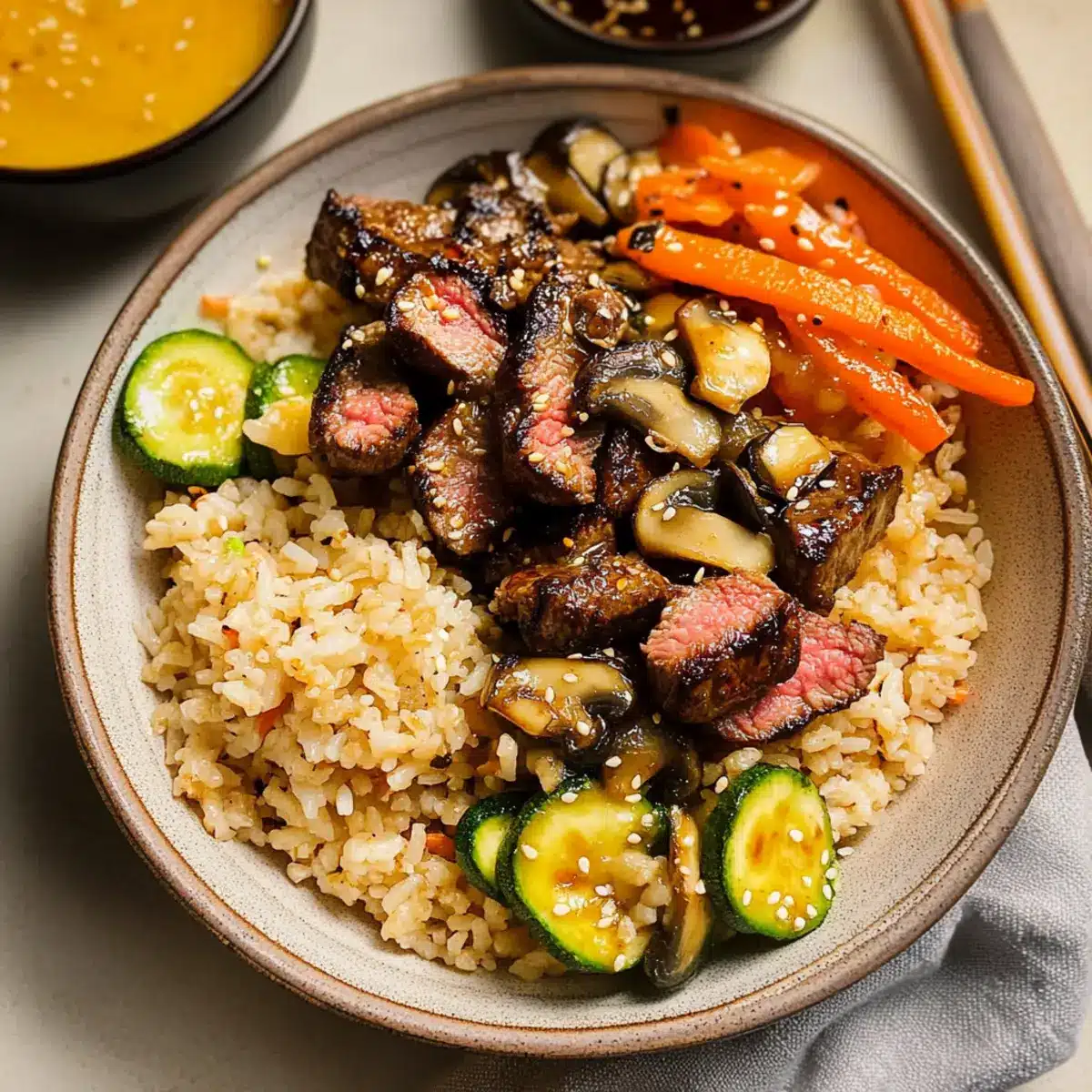
Savory Hibachi Steak Bowls for Quick Weeknight Dinners
Ingredients
Equipment
Method
- Begin by combining the sirloin steak with mirin, minced garlic, freshly grated ginger, and sesame oil in a bowl. Let it marinate at room temperature for 30 minutes to 1 hour.
- While the steak is marinating, wash and slice the carrots, zucchini, and mushrooms into bite-sized pieces. Set the prepared vegetables aside.
- Heat a large skillet or wok over medium-high heat and add a drizzle of vegetable oil. Add the sliced vegetables and sauté for about 5-7 minutes.
- Remove the cooked vegetables from the skillet and increase the heat to high. Add more oil if needed, then place the marinated sirloin steak in the skillet. Sear for approximately 5-8 minutes.
- Once the steak is cooked, let it rest for a couple of minutes before slicing it against the grain. Layer a scoop of fried rice in serving bowls, then top with the sliced steak and sautéed vegetables.
Leave a Reply