
As I stood in the kitchen, the aroma of sautéing garlic and ginger floated around me, instantly igniting my senses. Nothing beats the excitement of whipping up a comforting Thai Peanut Chicken recipe that brings everyone together, from hectic weeknight dinners to casual get-togethers with friends. This dish envelops juicy chicken pieces in a creamy, nutty sauce that’s incredibly easy to prepare, making it a perfect choice for those of us who love homemade food but crave simplicity. Plus, it’s easily customizable—add vegetables or switch the protein to fit your family’s tastes! Ready to indulge in this delightful fusion of flavors? Let’s dive into the recipe that’s sure to make your kitchen the heart of your home.
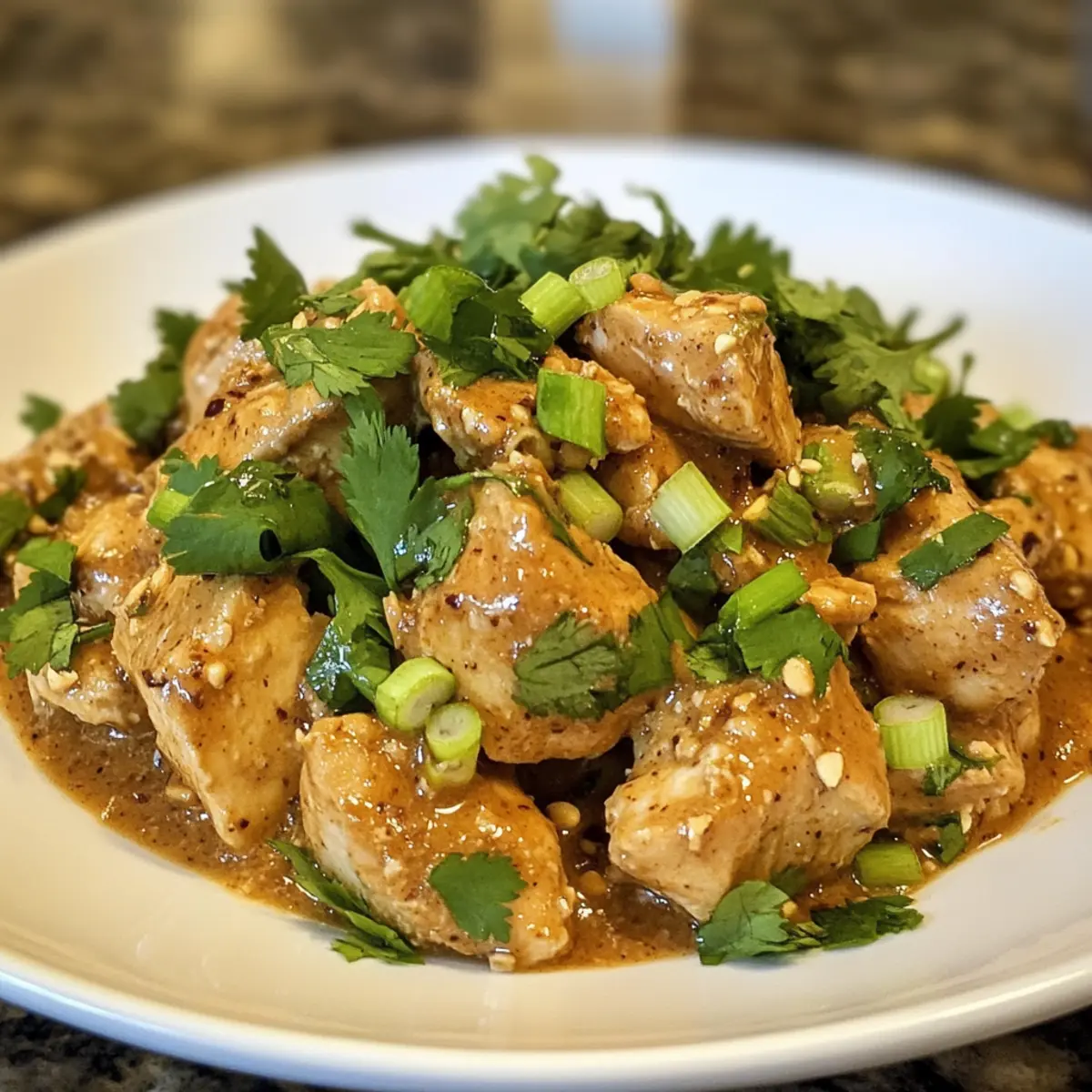
Why is this Thai Peanut Chicken special?
Simplicity: This recipe is a breeze, perfect for both novice cooks and culinary aficionados alike.
Creamy Indulgence: The luscious peanut sauce envelops the chicken, creating a dish that feels gourmet yet is effortlessly achievable at home.
Family-friendly: Kids and adults alike rave about the flavor—it’s a guaranteed hit for all ages!
Customization: Feel free to throw in your favorite veggies or swap chicken for tofu to cater to dietary preferences.
Time-saving: Ready in under 30 minutes, this dish is ideal for busy weeknights or last-minute gatherings.
With its vibrant taste, you’ll want to serve this alongside Mushroom Asparagus Chicken or Rotisserie Chicken Mushroom for a delightful meal spread!
Thai Peanut Chicken Ingredients
For the Chicken
• Boneless, Skinless Chicken Breasts – The star of the dish; adjust quantity based on how many you’re serving.
• Fresh Garlic – Adds aromatic depth; use firm cloves for the best flavor.
• Fresh Ginger – Provides a warm spiciness; opt for plump roots with smooth skin.
For the Sauce
• Full-Fat Coconut Milk – Contributes creaminess and balances heat; essential for rich flavor in this Thai Peanut Chicken recipe.
• Natural Peanut Butter – Provides a rich nutty base; avoid brands with added sugars or oils for a purer taste.
• Low-Sodium Soy Sauce – Adds saltiness for flavor; helps control sodium levels in the dish.
• Fresh Lime Juice – Brightens the dish and balances richness; use freshly squeezed for the best taste.
• Chili Flakes – Adds heat; adjust quantity to match your personal spice preferences.
For Garnishing
• Green Onions – Offers freshness and color; thinly slice for a beautiful presentation.
• Fresh Cilantro (optional) – Enhances flavor profile and visual appeal; sprinkle on top for an extra touch of freshness.
Step‑by‑Step Instructions for Thai Peanut Chicken Recipe
Step 1: Prep Ingredients
Begin by gathering your ingredients for the Thai Peanut Chicken. Chop the boneless, skinless chicken breasts into bite-sized pieces, ensuring uniformity for even cooking. Mince about three cloves of fresh garlic and a one-inch piece of fresh ginger, releasing their aromatic flavors. This prep will set you up for a smooth cooking experience, so take your time and enjoy the process.
Step 2: Cook Chicken
In a large skillet, heat a tablespoon of oil over medium-high heat. Once shimmering, add your prepared chicken pieces to the pan. Sauté the chicken for about 5–7 minutes, stirring occasionally, until golden brown and fully cooked through. The exterior should be slightly crisp, while remaining juicy on the inside. Remove the chicken from the skillet and set it aside on a plate.
Step 3: Make Sauce
In a medium bowl, whisk together a cup of creamy natural peanut butter, one can of full-fat coconut milk, a few tablespoons of low-sodium soy sauce, fresh lime juice, and chili flakes. Blend these ingredients until you achieve a smooth, luscious consistency. This nutty sauce will be the star of your Thai Peanut Chicken, so ensure all ingredients are well incorporated.
Step 4: Combine Chicken and Sauce
Return the cooked chicken to the skillet and pour the prepared sauce over it. Stir well to coat the chicken evenly, allowing the sauce to envelop each piece. Reduce the heat to low and let the mixture simmer for about 5 minutes. This will meld flavors beautifully, thickening the sauce slightly while the chicken absorbs that delectable peanut goodness.
Step 5: Garnish and Serve
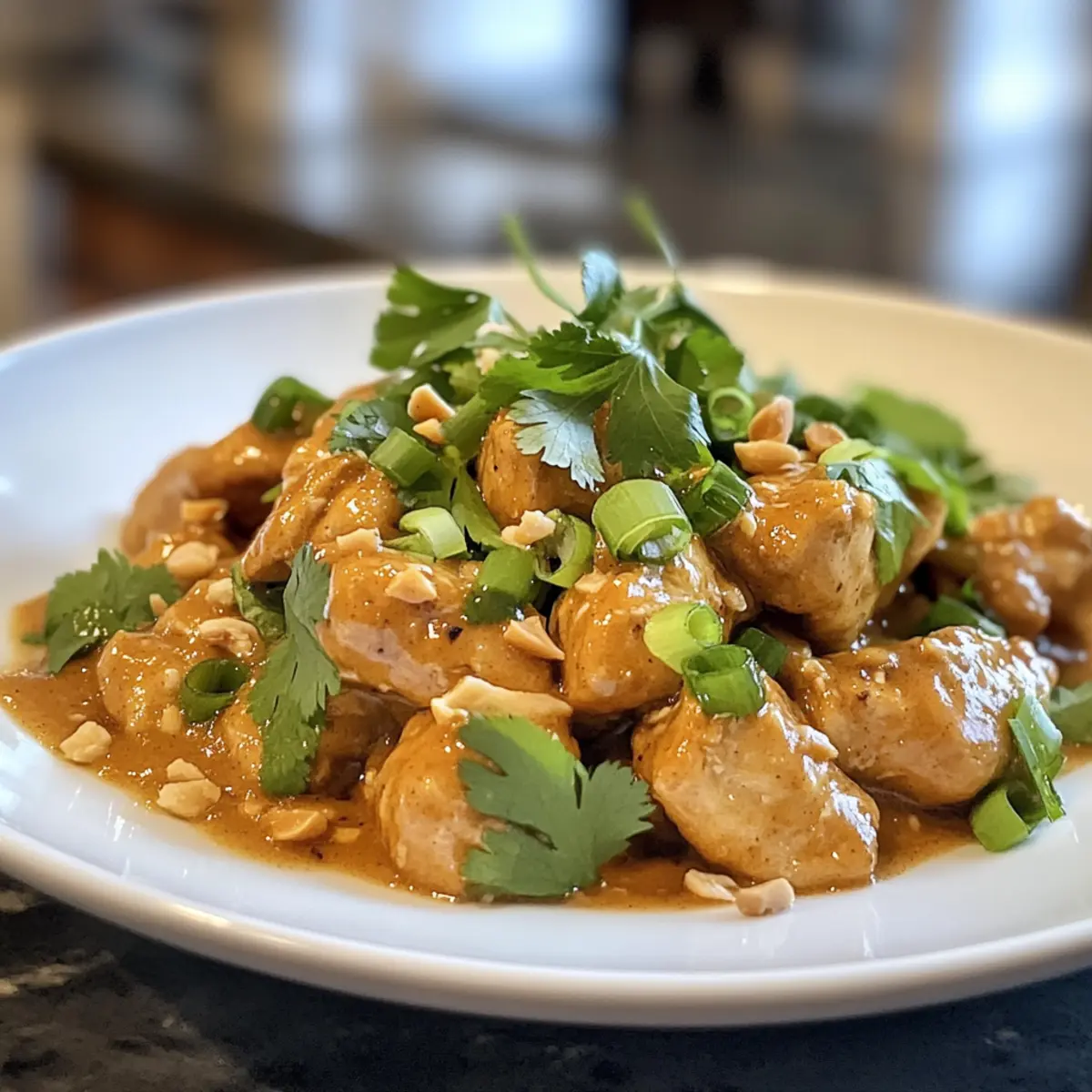
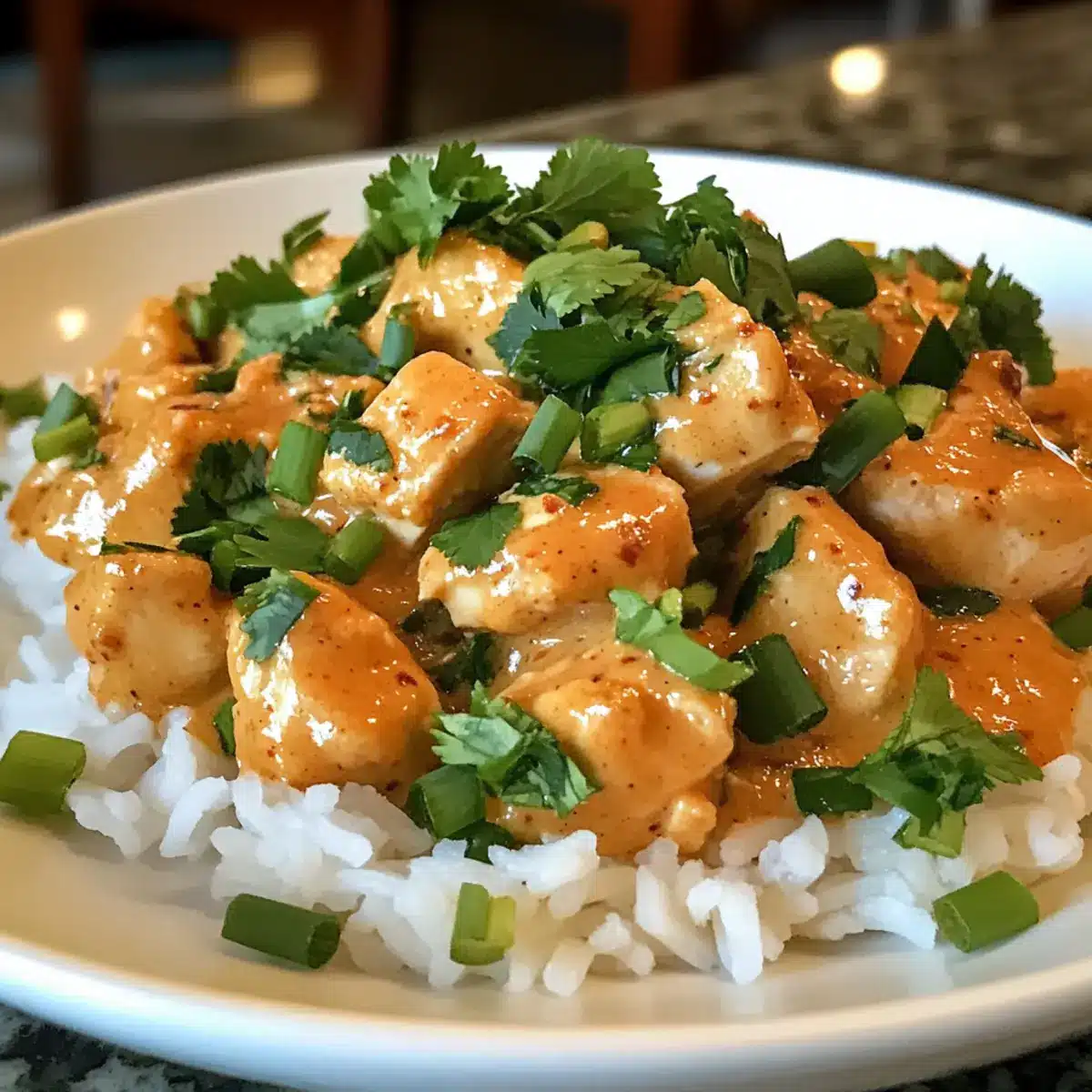
After simmering, remove the skillet from heat. Garnish your Thai Peanut Chicken with a sprinkle of thinly sliced green onions and fresh cilantro, if desired. The vibrant colors will make the dish even more enticing. Serve hot over a bed of fragrant jasmine rice or stir-fried noodles for a perfect family-pleasing meal. Enjoy the delightful fusion of flavors that now fills your kitchen!
Expert Tips for Thai Peanut Chicken
-
Marinate Chicken: For the best flavor, allow your chicken pieces to marinate in the peanut sauce for at least 30 minutes; this will enhance the taste significantly.
-
Choosing Peanut Butter: Opt for a natural peanut butter without added sugars or oils; it ensures a pure, nutty flavor in your Thai Peanut Chicken recipe.
-
Adjusting Spiciness: Keep the heat in check by adjusting the chili flakes to fit your family’s spice tolerance; start with less and add more if needed.
-
Adding Veggies: Incorporate seasonal vegetables like bell peppers or broccoli for extra nutrition and vibrant color; they also add delightful crunch.
-
Serving Suggestion: Pair this dish with jasmine rice or stir-fried noodles; the creamy sauce complements these sides beautifully, making for a well-rounded meal.
Thai Peanut Chicken Recipe Variations
Feel free to explore different twists on this Thai Peanut Chicken to suit your taste buds or dietary preferences!
-
Vegetarian Alternative: Replace chicken with tofu or tempeh for a plant-based delight that’s just as creamy and satisfying.
-
Nut-Free Version: Use sunbutter or tahini in place of peanut butter to create a nut-free sauce while keeping that creamy texture.
-
Add Veggies: Toss in seasonal vegetables like bell peppers, snap peas, or broccoli for added nutrition and colorful presentation.
-
Spicy Kick: Boost the heat by adding fresh sliced chili or a dash of sriracha to the sauce, if you prefer a fiery flavor.
-
Coconut-Free Option: Substitute coconut milk with cashew cream or a little extra chicken broth for a lighter sauce without the coconut flavor.
-
Zesty Citrus: Enhance the dish with a splash of orange juice or zest for a hint of sweetness and aromatic brightness.
-
Grain-Free: Serve the Thai Peanut Chicken over cauliflower rice for a low-carb, grain-free alternative, perfect for those watching their carbs.
-
Texture Twist: For extra crunch, top your dish with crushed peanuts or toasted sesame seeds right before serving.
Exploring these variations allows you to savor your favorite Thai Peanut Chicken dish time and time again! And while you’re at it, try pairing it up with the comforting flavors of Cajun Chicken Sloppy for a different take on hearty meals, or serve it alongside the delightful freshness of Asian Chicken Cranberry salad for a variety of tastes.
What to Serve with Irresistible Thai Peanut Chicken?
Dive into a complete meal bursting with flavors, textures, and comforting warmth that makes every bite memorable.
-
Jasmine Rice: This aromatic rice absorbs the creamy peanut sauce beautifully, creating a lush canvas for the dish.
-
Stir-Fried Vegetables: A colorful medley of snap peas, bell peppers, and carrots adds crunch and freshness, balancing the rich sauce perfectly.
-
Rice Noodles: Light and chewy, these noodles provide a lovely twist on the meal, soaking up the peanut sauce with delight.
-
Cucumber Salad: A refreshing cucumber salad with lime and mint cuts through the rich flavors, offering a bright, zesty contrast.
A light and effervescent drink, such as Thai Iced Tea, offers a sweet, fragrant pairing that complements the savory elements of the dish.
-
Mango Sticky Rice: For dessert, this traditional Thai treat’s sweetness and creamy coconut make a perfect ending to a delightful meal.
-
Thai Spring Rolls: Crisp and fresh, these rolls filled with vegetables and herbs enhance the experience with a lovely crunch and bright flavors.
Indulge in these pairings to elevate your Thai Peanut Chicken dinner into an unforgettable feast!
Make Ahead Options
These creamy Thai Peanut Chicken bites are a fantastic choice for meal prep enthusiasts! You can marinate the chicken in the peanut sauce for up to 24 hours in advance, allowing the flavors to deeply penetrate the meat while keeping it juicy. Additionally, the sauce itself can be prepared and stored in the refrigerator for up to 3 days. Just whisk together your peanut butter, coconut milk, soy sauce, lime juice, and chili flakes, then refrigerate until you’re ready to cook. When you’re ready to serve, simply sauté the marinated chicken until cooked through, add in the prepared sauce, heat it gently (to maintain that rich creaminess), and you’ll enjoy a delicious, homemade meal with minimal effort!
How to Store and Freeze Thai Peanut Chicken
Fridge: Store your Thai Peanut Chicken in an airtight container for up to 3 days. Make sure to let it cool before sealing to avoid condensation.
Freezer: If you want to keep it longer, freeze the chicken in an airtight container or freezer bag for up to 2–3 months. Thaw in the fridge overnight before reheating.
Reheating: When ready to enjoy, reheat gently on the stovetop over low heat, stirring occasionally to maintain the creamy sauce’s consistency.
Serve Hot: For the best flavor, serve your reheated Thai Peanut Chicken over rice or noodles, and enjoy the comforting, nutty goodness!
Thai Peanut Chicken Recipe FAQs
How do I choose the right chicken for this recipe?
Absolutely! For the juiciest results, opt for boneless, skinless chicken breasts that are fresh and firm to the touch. Look for ones without any dark spots or discoloration. If you prefer, you can also use chicken thighs for a richer flavor.
How long can I store leftovers, and how should I store them?
Very good question! Store your Thai Peanut Chicken in an airtight container in the refrigerator for up to 3 days. To maintain optimal flavor and texture, let it cool to room temperature before sealing it up. This way, you’ll keep that delicious creamy sauce intact!
Can I freeze Thai Peanut Chicken, and how do I do it?
Absolutely! To freeze your Thai Peanut Chicken, place it in an airtight container or a freezer-safe bag. Make sure to remove as much air as possible to prevent freezer burn. It can stay good in the freezer for up to 2–3 months. When you’re ready to enjoy, thaw it overnight in the fridge, then reheat gently on the stovetop.
What if the sauce is too thick after reheating?
No need to worry! If you find the sauce has thickened too much after reheating, simply add a little coconut milk or water, stirring until you reach your desired consistency. This addition will keep that creamy texture we all love while enhancing the flavor.
Is this dish suitable for those with peanut allergies?
Great question! Since this Thai Peanut Chicken recipe relies heavily on peanut butter, it may not be suitable for those with peanut allergies. However, you can substitute the peanut butter with sunflower seed butter for a nut-free alternative that mimics the creamy texture and flavor profile!
Can I customize the spice level in this recipe?
Definitely! The beauty of this Thai Peanut Chicken recipe is its versatility. If you prefer a milder flavor, start with a smaller amount of chili flakes and gradually add more to taste. If you like it spicy, feel free to kick it up a notch with fresh sliced chili or more flakes!
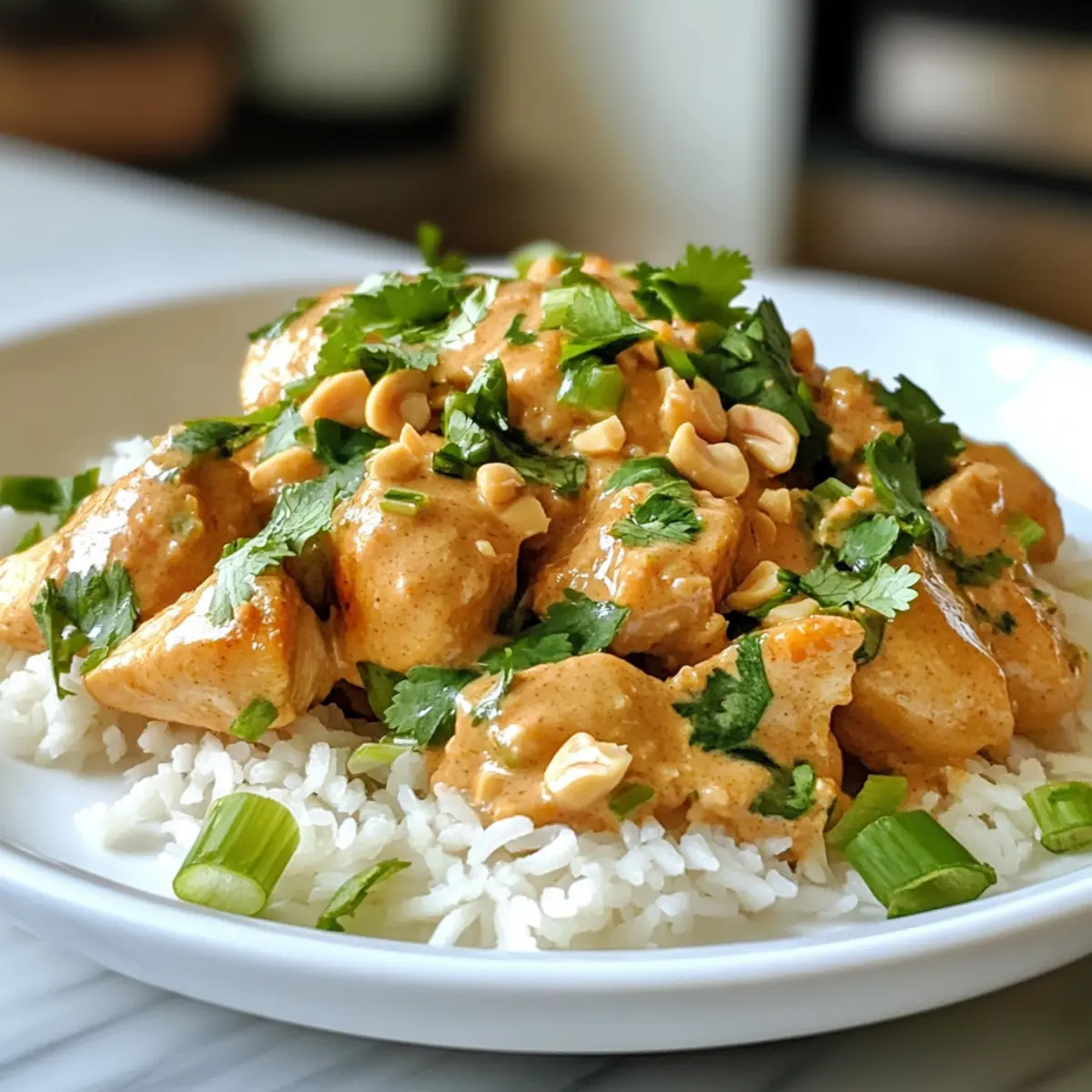
Creamy Thai Peanut Chicken Recipe Your Family Will Love
Ingredients
Equipment
Method
- Begin by gathering your ingredients for the Thai Peanut Chicken. Chop the boneless, skinless chicken breasts into bite-sized pieces.
- In a large skillet, heat a tablespoon of oil over medium-high heat. Once shimmering, add your prepared chicken pieces and sauté for 5–7 minutes.
- In a medium bowl, whisk together the peanut butter, coconut milk, soy sauce, lime juice, and chili flakes until smooth.
- Return the cooked chicken to the skillet, pour the sauce over it, and stir well. Let it simmer for about 5 minutes to meld the flavors.
- Garnish with sliced green onions and fresh cilantro if desired. Serve hot over jasmine rice or stir-fried noodles.
Leave a Reply