
The aroma of a sizzling skillet can instantly transport me to my favorite Thai restaurant, but what if I told you that creating those vibrant flavors at home is just 20 minutes away? This High Protein Thai Peanut Chicken Buddha Bowl is my go-to for a nourishing meal that never compromises on taste—even during the busiest of weeknights. Packed with over 30 grams of protein per serving, it’s the perfect combination of tender chicken, crunchy veggies, and a creamy, dreamy peanut sauce. Bonus: it’s completely customizable! Whether you choose tofu for a vegetarian twist or shrimp for a seafood spin, this recipe not only sparks joy but also makes meal prepping a breeze. Ready to dive into a bowl of deliciousness that’s bound to become a household favorite? Let’s get started!
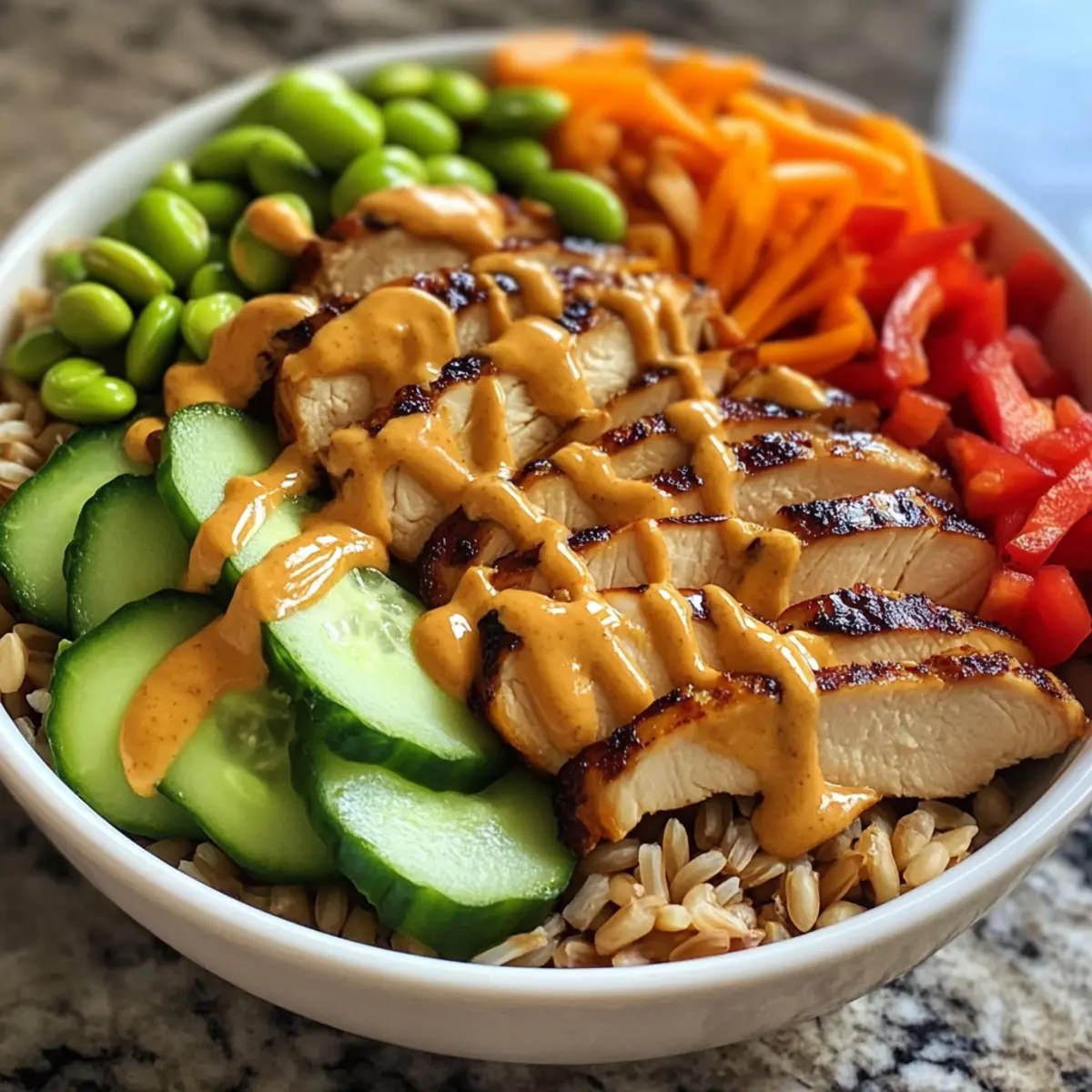
Why Is This Buddha Bowl So Special?
Quick, Easy Meal Prep: In just 20 minutes, you can whip up a nutrient-packed dinner that satisfies.
High Protein Powerhouse: Each serving boasts over 30 grams of protein, perfect for fitness enthusiasts.
Customizable Options: Swap chicken for tofu or shrimp based on your preferences, ensuring everyone’s happy!
Flavor Explosion: The creamy peanut sauce is a delight, balancing the freshness of crunchy veggies perfectly.
Wholesome Ingredients: Packed with fiber and vitamins, this dish promotes balanced nutrition for all.
For a delightful accompaniment, consider serving it alongside a refreshing Asian slaw. If you’re a fan of meal prep, check out my Bang Chicken Bowl for another quick fix!
Thai Peanut Chicken Buddha Bowl Ingredients
For the Chicken
- Boneless Skinless Chicken Breast – Main protein source providing flavor and texture; organic is best for quality.
- Garlic Powder – Adds depth of flavor; can easily substitute with 1 clove of fresh garlic.
- Ground Ginger – Provides warmth and a hint of spice; fresh ginger is a great alternative.
- Salt – Enhances all flavors; adjust to your taste preference.
- Black Pepper – Adds mild heat; freshly ground is preferred for the best flavor.
- Olive Oil – Used for cooking chicken; consider sesame oil for a more robust flavor.
For the Base
- Cooked Brown Rice or Quinoa – Acts as a wholesome base, providing complex carbohydrates and fiber.
- Carrots (Julienned or Shredded) – Adds color and crunch; bell peppers can be used for variety.
- English Cucumber (Sliced Thin) – Provides freshness and moisture; zucchini is a possible substitute.
- Red Bell Pepper (Thinly Sliced) – Contributes sweetness and vibrant color; feel free to use other pepper varieties.
- Edamame (Shelled and Cooked) – Offers plant-based protein; frozen edamame works well when thawed.
For the Sauce
- Creamy Peanut Butter – Base providing richness and nuttiness; almond butter is a good alternative.
- Low-Sodium Soy Sauce – Adds umami flavor; tamari is a gluten-free alternative worth considering.
- Rice Vinegar – Adds a touch of acidity; you can replace it with apple cider vinegar if needed.
- Honey – Sweetens the sauce nicely; maple syrup works as a vegan substitute.
- Sesame Oil – Enhances aromatics; can be omitted for a lighter taste.
- Warm Water – Used to adjust the sauce consistency; add gradually until you reach the desired thickness.
For Garnishing
- Chopped Green Onions – Adds freshness and texture for that final flourish.
- Sesame Seeds – Optional garnish that provides a lovely crunch and nutty flavor; a perfect finishing touch!
Get ready to create a Thai Peanut Chicken Buddha Bowl that’s not only mouthwateringly good but also a feast for the eyes!
Step‑by‑Step Instructions for Thai Peanut Chicken Buddha Bowl
Step 1: Marinate Chicken
In a medium bowl, toss the sliced boneless skinless chicken breast with garlic powder, ground ginger, salt, and black pepper until evenly coated. Allow the chicken to marinate for about 5 minutes, giving it time to absorb the flavors while you prepare your skillet.
Step 2: Cook Chicken
Heat 1 tablespoon of olive oil in a large skillet over medium-high heat. Once the oil shimmers, add the marinated chicken slices and cook for 3–4 minutes on each side, until golden brown and the internal temperature reaches 165°F. Remove the chicken from the skillet and set it aside.
Step 3: Prepare Sauce
In a small bowl, whisk together 1/3 cup creamy peanut butter, 2 tablespoons low-sodium soy sauce, 1 tablespoon rice vinegar, 1 tablespoon honey, and 1 teaspoon sesame oil. Gradually stir in warm water, one tablespoon at a time, until you achieve a smooth, drizzling consistency for the Thai Peanut Chicken Buddha Bowl.
Step 4: Assemble Bowls
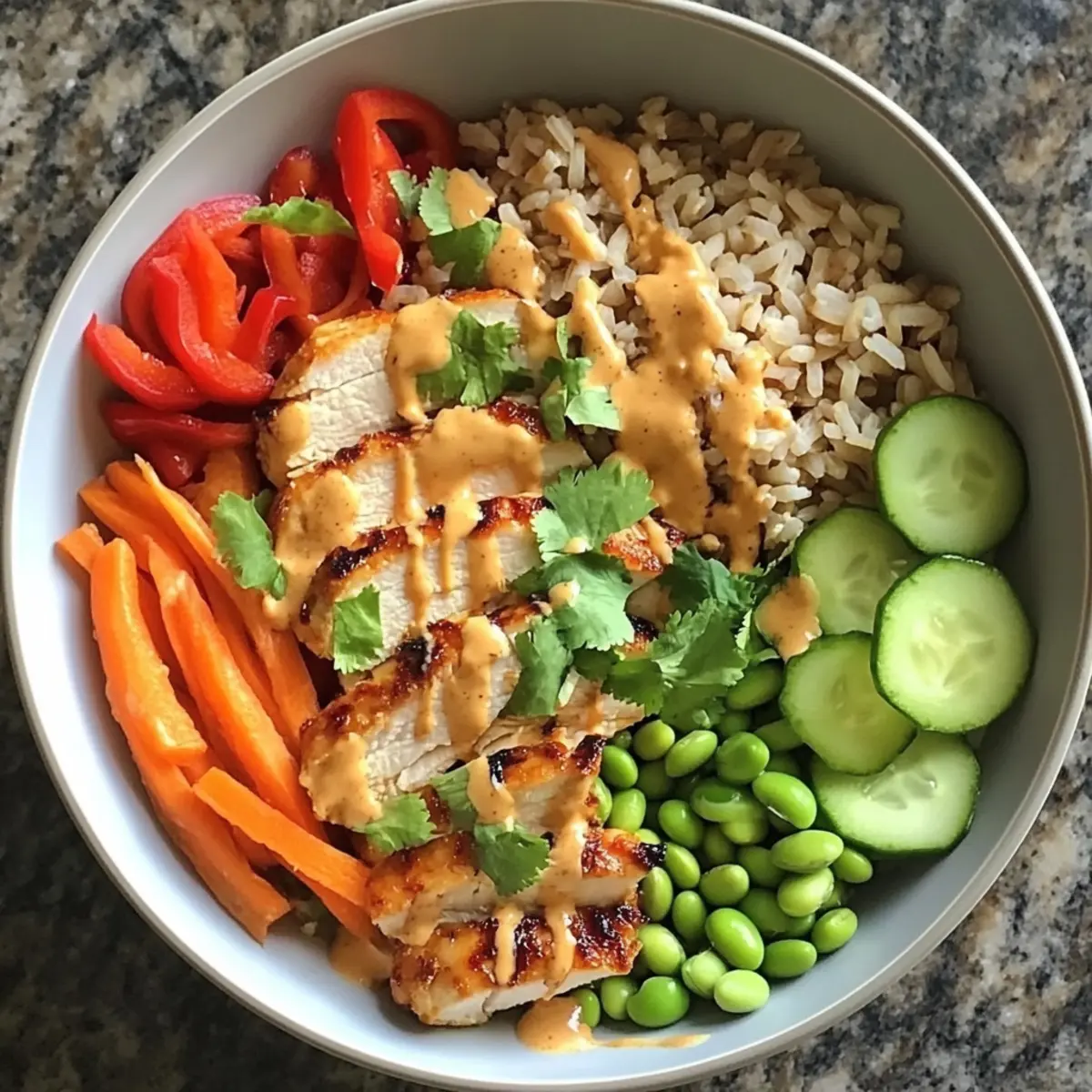
Divide the cooked brown rice or quinoa among serving bowls, creating a nutritious base. Arrange the julienned carrots, sliced cucumber, thinly sliced bell pepper, and shelled edamame in colorful sections over the grains, making the bowl visually appealing and inviting.
Step 5: Top and Serve
Place the cooked chicken on top of the vibrant vegetables in each bowl. Generously drizzle the prepared peanut sauce over the entire Buddha bowl, showcasing those rich, creamy flavors. Finally, garnish with chopped green onions and a sprinkle of sesame seeds for that added crunch and freshness.

Make Ahead Options
These Thai Peanut Chicken Buddha Bowls are perfect for meal prep enthusiasts looking to save time during a busy week! You can marinate the chicken up to 24 hours in advance, which allows the flavors to penetrate deeply for that irresistible taste. Additionally, you can chop the vegetables (carrots, cucumber, and bell peppers) and store them in airtight containers for up to 3 days—just be sure to refrigerate them to maintain freshness. When you’re ready to serve, simply cook the marinated chicken and assemble the bowls. Drizzle the creamy peanut sauce over the top, and you’ll have a delicious, satisfying meal in no time!
Expert Tips for Thai Peanut Chicken Buddha Bowl
- Even Slices: Ensure chicken strips are evenly sliced to allow for uniform cooking and maximum flavor absorption.
- Moisture Matters: Avoid overcooking the chicken; check for clear juices to maintain its juicy texture when preparing your Thai Peanut Chicken Buddha Bowl.
- Freshness First: Assemble bowls just before serving to keep veggies crisp and vibrant; this enhances both flavor and presentation.
- Storage Savvy: Store components separately in airtight containers for up to 2 days to prevent sogginess and keep flavors fresh.
- Substitutions Ready: Consider swapping chicken for tofu or shrimp depending on dietary preferences; this ensures everyone enjoys their Buddha bowl!
How to Store and Freeze Thai Peanut Chicken Buddha Bowl
Fridge: Store components separately in airtight containers for up to 2 days. This helps to keep the veggies crisp and the chicken moist.
Freezer: You can freeze the cooked chicken and peanut sauce for up to 3 months. Thaw in the fridge overnight before reheating.
Reheating: Reheat the chicken in a skillet over medium heat until warmed through, about 4–5 minutes. Keep veggies cold or serve at room temperature for best flavor.
Meal Prep: Ideal for meal prep as you can prepare the ingredients in advance and store them separately to prevent sogginess.
What to Serve with Thai Peanut Chicken Buddha Bowl
Enhance your dining experience with thoughtful pairings that elevate every flavor note of this delightful dish.
- Asian Slaw: A crunchy, tangy counterpart that brightens up the meal with fresh vegetables and a zesty dressing.
- Steamed Broccoli: This side adds a nutritious green element, balancing the richness of the peanut sauce beautifully.
- Sesame Edamame: Packed with protein and satisfying texture, it complements the bowl’s ingredients while offering a delightful chew.
- Coconut Rice: The creamy coconut flavor elevates the dish, bringing a smooth richness that melds perfectly with the peanut sauce.
- Miso Soup: A warm, savory broth that cleanses the palate, providing a comforting contrast to the vibrant Buddha bowl.
- Fresh Fruit Salad: A sweet and refreshing end to the meal, this light dessert can brighten your evening, rounding off the flavors perfectly.
- Ginger Tea: A comforting beverage that aids digestion while enhancing the Asian flavors, making it a perfect pairing for this meal.
- Chili Lime Corn: This spicy, zesty side dish adds a kick and matches the bold flavors of the Buddha bowl beautifully.
Thai Peanut Chicken Buddha Bowl Variations
Feel free to get creative with your Thai Peanut Chicken Buddha Bowl; personalizing this dish adds a unique twist to every bite!
- Tofu Swap: Replace chicken with firm tofu for a plant-based option that’s just as satisfying.
- Shrimp Delight: Use cooked shrimp instead of chicken for a quick seafood twist, enhancing the bowl’s taste and protein.
- Veggie Medley: Add colorful veggies like snap peas or radishes to elevate the crunch and nutrition levels.
- Spiralized Zucchini: For a lighter base, substitute rice or quinoa with spiralized zucchini, perfect for low-carb diets.
- Sriracha Kick: Drizzle sriracha over your bowl for a spicy boost that complements the creamy peanut sauce beautifully.
- Coconut Milk Creaminess: Mix in a splash of coconut milk into the sauce for an even richer taste, whisking everything together.
- Nutty Almond Butter: Swap peanut butter for almond butter to change up the flavor profile while keeping it creamy and delicious.
If you’re excited about meal prep as I am, explore my quick Cajun Chicken Sloppy for another delightful twist on wholesome cooking!
Thai Peanut Chicken Buddha Bowl Recipe FAQs
What type of chicken should I use for this recipe?
I recommend using boneless, skinless chicken breasts for the best flavor and texture. Organic chicken is preferable, as it tends to be more tender and free from antibiotics. If you’re looking for a healthier option, consider using chicken thighs, which have a bit more fat and flavor.
How should I store leftover Buddha bowl components?
Store the chicken, rice or quinoa, and vegetables separately in airtight containers in the fridge for up to 2 days. This separation helps maintain the vegetables’ crispness and prevents the rice from becoming soggy. The peanut sauce can also be kept in a separate container, ready to drizzle when you’re ready to eat!
Can I freeze the Thai Peanut Chicken Buddha Bowl?
Absolutely! You can freeze the cooked chicken and peanut sauce for up to 3 months. To freeze, let them cool completely before transferring to freezer-safe containers. When you’re ready to enjoy, thaw overnight in the refrigerator and reheat the chicken gently in a skillet. Serve the vegetables cold or at room temperature for the best taste.
What alternatives can I use for the sauce?
If you’re looking for alternatives to peanut butter, almond butter works well too! For a nut-free version, try sunbutter. You can also adjust the sweetness of the sauce by substituting honey with maple syrup for a vegan option.
How can I add more veggies to my Buddha bowl?
The beauty of the Thai Peanut Chicken Buddha Bowl is its versatility! You can add more colorful vegetables like snap peas, radishes, or kale for extra crunch and nutrition. Feel free to experiment based on what you have on hand or your favorite seasonal produce!
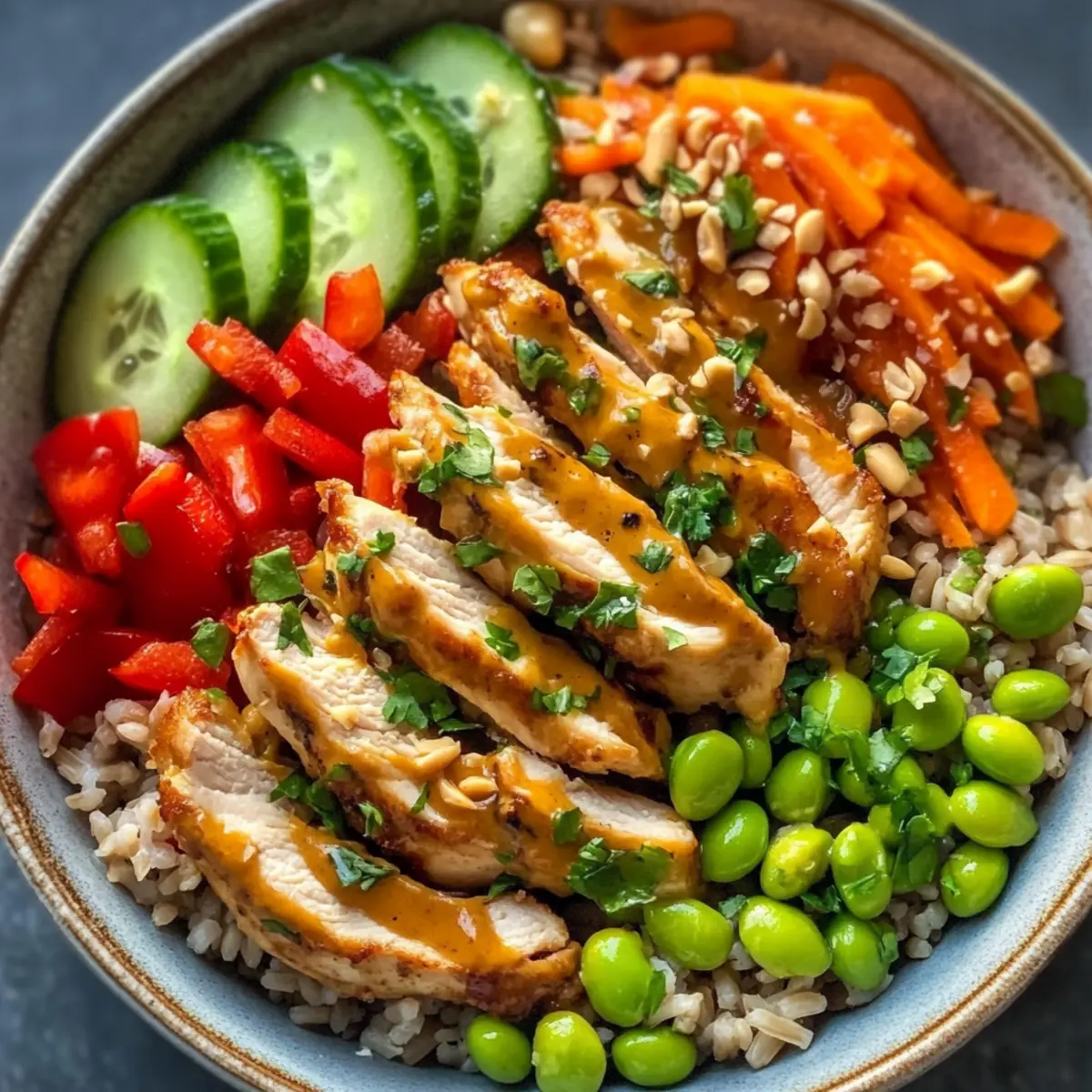
Delicious Thai Peanut Chicken Buddha Bowl for Quick Meal Prep
Ingredients
Equipment
Method
- In a medium bowl, toss the sliced boneless skinless chicken breast with garlic powder, ground ginger, salt, and black pepper until evenly coated. Allow the chicken to marinate for about 5 minutes.
- Heat 1 tablespoon of olive oil in a large skillet over medium-high heat. Once the oil shimmers, add the marinated chicken slices and cook for 3–4 minutes on each side, until golden brown and the internal temperature reaches 165°F.
- In a small bowl, whisk together 1/3 cup creamy peanut butter, 2 tablespoons low-sodium soy sauce, 1 tablespoon rice vinegar, 1 tablespoon honey, and 1 teaspoon sesame oil. Gradually stir in warm water, one tablespoon at a time, until you achieve a smooth consistency.
- Divide the cooked brown rice or quinoa among serving bowls. Arrange julienned carrots, sliced cucumber, thinly sliced bell pepper, and shelled edamame over the grains.
- Place the cooked chicken on top of the vibrant vegetables in each bowl. Drizzle the peanut sauce over the Buddha bowls and garnish with chopped green onions and sesame seeds.
Leave a Reply