
As I stirred the vibrant simmering pot, a wave of spicy aroma enveloped my kitchen, transporting me straight to the bustling streets of Lagos. This Hearty Nigerian Chicken Stew with Tomato-Pepper Sauce is not just a meal; it’s an experience that captures the essence of West African cuisine. Tender chicken pieces meld beautifully with a zesty, richly flavored sauce that can be tailored to your spice preference, making it a truly customizable comfort food. Whether paired with fluffy rice or sweet plantains, this dish transforms any ordinary gathering into a memorable feast. Ready to bring a taste of Nigeria to your table? Let’s dive into this delicious culinary adventure together!

Why is Nigerian Chicken Stew a Must-Try?
Comforting, This dish radiates warmth, making it the perfect choice for cozy nights at home or festive gatherings.
Customizable, Adjust the spice level to suit your taste, whether you prefer mild or fiery flavors.
Hearty, With tender chicken simmered in a rich tomato-pepper sauce, each bite is deeply satisfying.
Versatile, Serve it over fluffy rice, with sweet fried plantains, or even in a wrap for a modern twist.
Quick and Easy, It’s a straightforward recipe anyone can master, promising a flavorful meal without hours in the kitchen. For more comforting dishes, check out my Caramelised Soy Chicken or Asian Chicken Cranberry recipes!
Nigerian Chicken Stew Ingredients
For the Stew
• Chicken – Main protein source; for the best flavor, choose bone-in pieces, but boneless can save time.
• Salt – Enhances overall flavors; adjust based on your taste preferences.
• Black Pepper – Adds warmth and depth; freshly ground is recommended for maximum flavor.
• Paprika – Offers color and a mild flavor; try smoked paprika for a unique twist.
• Curry Powder – Gives warmth and complexity; if you’re in the mood for something different, use garam masala instead.
• Thyme – Adds aromatic notes; dried thyme works wonders if fresh is unavailable.
• Chopped Onion – The base flavor enhancer; don’t shy away from yellow or red onions for more sweetness.
• Vegetable Oil – Used for frying and sautéing; switch to coconut oil for a tropical flair.
• Roma Tomatoes – Forms the heart of the stew; fresh tomatoes are optimal, but canned works in a pinch.
• Red Bell Pepper – Adds sweetness and vibrant color to the dish.
• Scotch Bonnet Peppers – Delivers heat and flavor; for a milder experience, swap with habanero or use sweet peppers instead.
• Tomato Paste – Enhances richness and depth of flavor in the stew.
• Garlic Powder – Boosts savoriness; feel free to use fresh garlic if you have it on hand.
• Ginger Powder – Adds warmth and brightness; swap for fresh ginger if you prefer a bolder taste.
• Bouillon Cube – Infuses umami flavor; homemade stock can be a cleaner alternative for a natural taste.
Optional Garnish
• Chopped Parsley or Cilantro – Sprinkle on top before serving for a fresh finish.
This delightful recipe for Nigerian Chicken Stew is perfect for creating lasting memories around the dinner table, offering warmth and flavor in every bite!
Step‑by‑Step Instructions for Nigerian Chicken Stew
Step 1: Marinate Chicken
In a large bowl, mix the chicken pieces with salt, black pepper, paprika, curry powder, thyme, and chopped onion. Ensure the chicken is evenly coated, then cover the bowl and let it marinate for at least 30 minutes at room temperature. This will allow the flavors to penetrate the meat, making your Nigerian Chicken Stew even more delicious.
Step 2: Sear Chicken
Heat vegetable oil in a large skillet over medium-high heat until hot. Add the marinated chicken pieces and cook for about 5-7 minutes, turning occasionally until they are browned on all sides. Once browned, remove the chicken from the skillet and set it aside on a plate. This step helps to lock in moisture and flavor.
Step 3: Prepare Sauce
In a blender, combine the Roma tomatoes, red bell pepper, a small onion, and scotch bonnet peppers. Blend until you achieve a smooth puree. This vibrant mixture will serve as the base for your Nigerian Chicken Stew, adding both richness and depth to the flavor profile. Set the blended sauce aside for later.
Step 4: Cook Base
Using the same skillet, add a bit more oil if necessary and heat it over medium heat. Stir in the tomato paste and cook for about 2 minutes until slightly caramelized, which enhances its flavor. Then, add the blended tomato mixture to the skillet, cooking for about 10 minutes until it begins to thicken and simmer, filling your kitchen with enticing aromas.
Step 5: Flavor Adjustments
Once the sauce has thickened, sprinkle in the garlic powder, ginger powder, and crumbled bouillon cube. Stir all the ingredients together, allowing them to meld beautifully. Taste and adjust the salt according to your preference. These adjustments will elevate the flavors of your Nigerian Chicken Stew, creating a well-rounded sauce.
Step 6: Simmer Stew
Return the seared chicken pieces to the skillet, ensuring they are submerged in the sauce. Cover the skillet with a lid and let it simmer on low heat for about 25-30 minutes. Baste the chicken occasionally to keep it moist. You’ll know it’s ready when the chicken is tender and fully cooked, reaching an ideal internal temperature of 165°F.
Step 7: Final Touch
After simmering, remove the skillet from the heat and let it sit for a couple of minutes. Before serving, sprinkle freshly chopped parsley or cilantro on top for an aromatic finish. Your homemade Nigerian Chicken Stew is now ready to be enjoyed, showcasing vibrant colors and rich flavors that are sure to warm the heart!

Nigerian Chicken Stew Variations & Substitutions
Feel free to make this dish your own, adjusting flavors and ingredients to suit your tastes!
-
Vegetarian Option: Replace chicken with chickpeas or firm tofu, giving the dish a delightful plant-based twist. The robust sauce creates a rich flavor that complements plant proteins beautifully.
-
Lower-Carb Alternative: Serve with cauliflower rice instead of traditional rice. The light, fluffy texture pairs well with the hearty stew while keeping the carbs in check.
-
Flavor Boost: Add a bay leaf or a splash of coconut milk during simmering for extra depth. These ingredients can elevate the stew’s aroma and flavor, making it even more irresistible.
-
Heat Level Adjustment: Begin with just half a scotch bonnet and taste before adding more. This allows you to customize the spice to your personal preference without overwhelming the dish.
-
Garnish Ideas: Top with sliced avocado or a dollop of yogurt for creaminess. These additions balance the savory spices and add a refreshing finish.
-
Serving as a Wrap: Embrace a modern twist—serve the stew in a soft tortilla or lettuce wrap for a fun, handheld meal. This keeps things casual while allowing for endless deliciousness.
-
Use Different Proteins: Swap chicken for beef or lamb, adjusting cooking times accordingly. Each option brings its unique flavor profile to the dish, making it a delightful surprise for your taste buds.
If you want more comforting recipes, check out my Mushroom Asparagus Chicken or Cajun Chicken Sloppy for some additional culinary inspiration!
How to Store and Freeze Nigerian Chicken Stew
Fridge: Store leftover Nigerian Chicken Stew in an airtight container for up to 4 days. Ensure it cools to room temperature before sealing to maintain flavor and freshness.
Freezer: For longer storage, freeze the stew in a freezer-safe container for up to 3 months. Portion it into smaller servings for easy reheating later.
Thawing: Thaw frozen stew in the refrigerator overnight to gently return it to a safe temperature. Reheat on the stovetop or microwave until steaming hot.
Reheating: When reheating, add a splash of water if the stew is too thick. Stir well and heat until it reaches an internal temperature of 165°F for safe consumption.
Make Ahead Options
Preparing Nigerian Chicken Stew ahead of time is a great way to save precious minutes during busy weeknights! You can marinate the chicken with the spices up to 24 hours in advance, allowing those flavors to deeply penetrate the meat. Additionally, you can blend the tomato-pepper sauce and store it in the refrigerator for up to 3 days; just be sure to keep it in an airtight container to maintain its freshness. When you’re ready to serve, simply sear the marinated chicken, cook the sauce, and then simmer the chicken until tender. With this make-ahead strategy, you’ll enjoy restaurant-quality Nigerian Chicken Stew with minimal effort!
Expert Tips for Nigerian Chicken Stew
• Marinate Smartly: Ensure the chicken is marinated for at least 30 minutes to deepen the flavors, making your Nigerian Chicken Stew even more delicious.
• Searing is Key: Always sear the chicken until browned for a flavorful base. It locks in moisture and ensures a rich, hearty taste in the final dish.
• Blend to Perfection: When making the sauce, blend your tomatoes and peppers until very smooth. This creates a velvety texture that transforms your stew into a comforting masterpiece.
• Adjust Spice Levels: To control the heat, start with one scotch bonnet pepper. You can always add more, but it’s difficult to tone down the spice later.
• Simmer for Success: Allow the stew to simmer with the lid on, basting the chicken occasionally. This will keep it moist while deepening the flavors of the sauce.
What to Serve with Hearty Nigerian Chicken Stew with Tomato-Pepper Sauce
Looking to create a feast that perfectly complements the heartwarming stew, why not explore these delightful pairings?
- Fluffy White Rice: A classic choice that soaks up the rich sauce beautifully, providing a comforting base for every bite.
- Sweet Fried Plantains: Their natural sweetness balances the stew’s spices, offering a delicious contrast in both flavor and texture.
- Boiled Yams: Creamy and starchy, yams add a delightful heartiness, enhancing the comfort factor of your meal.
- Cauliflower Rice: For a lighter option, this low-carb substitute allows the flavors of the stew to shine while keeping it fresh.
- Quinoa Salad: A grainy side packed with nutrients and a light dressing adds a refreshing touch to your table.
- Pineapple Ginger Juice: Elevate your meal with a sweet and tangy drink that cleanses the palate and pairs beautifully with spicy dishes.
- Coconut Milk Pudding: For a light dessert, this creamy treat echoes the tropical flavors of the stew and provides a cooling finish.
- Fresh Green Salad: A crisp salad with a citrus vinaigrette refreshes your taste buds and brings a vibrant, crunchy element to the meal.
- Gari (Fermented Cassava): This traditional side offers unique textures that contrast nicely with the stew, making every mouthful an adventure!
- Nigerian Chin Chin: A sweet, crunchy snack for after the meal, these bite-sized goodies are perfect to nibble on while reminiscing about the feast.

Nigerian Chicken Stew Recipe FAQs
How do I select ripe tomatoes for the stew?
Absolutely! Choose Roma tomatoes that are firm but slightly yielding to the touch. Look for vibrant, deep red skins without dark spots or blemishes. If you can’t find fresh, opt for good-quality canned tomatoes as a substitution.
What is the best way to store leftover Nigerian Chicken Stew?
Store any leftover Nigerian Chicken Stew in an airtight container in the refrigerator. It’s best enjoyed within 3 to 4 days. Make sure it’s cooled to room temperature before sealing to preserve its flavors.
Can I freeze Nigerian Chicken Stew?
Very much so! Just portion it into freezer-safe containers and it can be frozen for up to 3 months. When you’re ready to enjoy it again, simply thaw it overnight in the fridge before reheating. This method helps maintain its robust flavor and texture.
What should I do if my stew is too spicy?
If your stew ends up a bit spicier than desired, don’t worry! Try adding a splash of coconut milk or cream to mellow the heat. Another option is to stir in some diced potatoes or carrots while simmering, which will absorb some of the heat and balance the flavors.
Is this stew suitable for dietary restrictions?
Yes, it can be! This dish is Halal and easily customizable. If you’re cooking for someone with allergies, opt for gluten-free bouillon cubes and verify that all other ingredients align with their dietary needs. For a vegetarian variation, chickpeas or firm tofu can be substituted for chicken.
How should I know if the chicken is cooked through?
To ensure safe consumption, use a meat thermometer to check if the chicken has reached an internal temperature of 165°F. You can also cut into the thickest part of the chicken; the juices should run clear, and the meat should be opaque and tender.
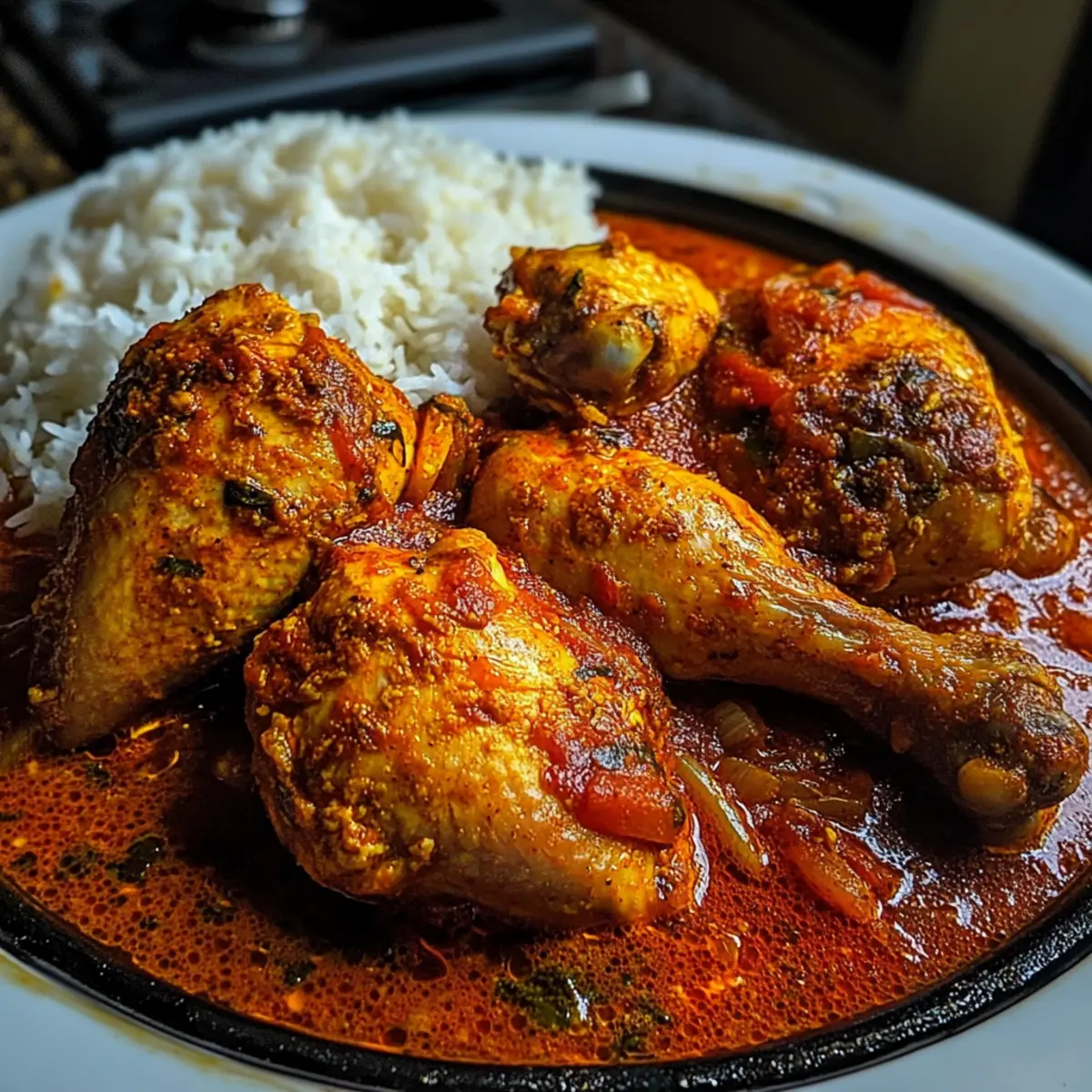
Savor the Comfort of Nigerian Chicken Stew at Home
Ingredients
Equipment
Method
- Marinate the chicken with salt, black pepper, paprika, curry powder, thyme, and chopped onion. Let sit for 30 minutes.
- Heat vegetable oil and sear the chicken until browned, about 5-7 minutes. Remove and set aside.
- Blend Roma tomatoes, red bell pepper, onion, and scotch bonnet peppers into a smooth puree.
- In the same skillet, cook tomato paste for 2 minutes, then add blended mixture and simmer for 10 minutes.
- Mix in garlic powder, ginger powder, and crumbled bouillon cube. Taste and adjust salt as needed.
- Return the chicken to the skillet, cover, and simmer on low for 25-30 minutes until tender.
- Let the stew sit for a couple of minutes, then garnish with parsley or cilantro before serving.
Leave a Reply